
Reflections from Federation’s President & CEO

A Note from Solly Kane
Reflections from Federation’s President & CEO
July 28, 2026
Dear Seattle Community,
Today we mark 20 years since the antisemitic attack at the Federation offices that claimed the life of Pamela Waechter, z”l, and injured five Federation employees.
Sadly, as we remember the cruelty of twenty years ago, another terrible shooting happened just two days ago here locally in our Seattle community at the annual Bite of Seattle festival. These tragedies remind us how precious every life is and how much work remains to build communities where people can gather and celebrate without fear of violence.
You can read more of my thoughts about today’s somber anniversary in my letter from last week. To mark today’s anniversary and remember Pam, we have invited some longtime leaders in our Jewish community to share their reflections. You can read their comments below.
May Pam’s memory continue to be a blessing, and may our Jewish communities know only times of peace and joy.
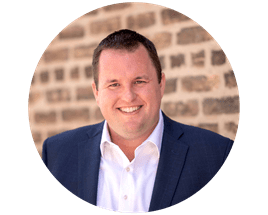

Solly Kane
President & CEO
Jewish Federation of Greater Seattle
Solly Kane
President & CEO
Jewish Federation of Greater Seattle
Ilana Cone Kennedy
CEO, Holocaust Center for Humanity
I stared into the face of the man who had shot six of my colleagues, killing one of them. It was only by sheer luck that I avoided the line of fire that day. I sat on the witness stand twice, staring directly at the shooter, as I described my first-hand account of this brutal act of antisemitism for the jury.
On Friday, July 28, 2006, at 4:00 pm, a man forced his way into our office building and began shooting my colleagues, holding all Jews responsible for the conflict in Israel that was raging at that time. I had been working at the Holocaust Center for three years, and I was also working a few extra hours at the Jewish Federation, which was located in the same building. My life changed – irreversibly – that day.
The police told me later that I was the first 911 call. I was still talking to them on the phone as I exited the building and encountered one of my colleagues from the Federation coming out from another exit – she had been shot twice, and she collapsed at my feet. Only shortly before the shooter entered the building, I had been working with her at her desk, but I had stepped away to greet an out-of-town visitor to the Holocaust Center. The visitor, from Philadelphia, emailed me on the anniversary of the shooting every year for 18 years until she passed away.
At the trials, my 911 call was played for the jury. I was surprisingly calm on the phone.
Those of us who escaped the building on our own were ushered into Starbucks on the corner of 2nd and Lenora. We waited there for hours, trying to determine who was missing. Over and over, we listed names.
In the days and weeks that followed the mass shooting, as we tried to put ourselves back together, I became forever intertwined and committed to this community: the Jewish community, the Seattle community, the allies and strangers that all came forward in a tremendous show of support. The phone calls, messages, the flowers – never underestimate how much it means when you reach out to someone. Holocaust survivors called to check on me (an irony that was not lost on me). My commitment to teaching about the ongoing reality of antisemitism, and the history and lessons of the Holocaust became more than an interest – it became my purpose.
My son Erez was born just two months after the shooting. He was tiny and early, and as a new mom I was worried about how my stress might have affected him. But he was beautiful and healthy, and his age is a marker of just how many years have passed.
This year, Erez turns 20. I’m forever reminded of my luck, the unpredictable nature of our lives despite our best efforts to control them, and the strength and power of our community.
Rabbi James Mirel
Rabbi Emeritus, Temple B’nai Torah
Pam was a beloved professional in our Jewish community, a lay leader of Temple B’nai Torah, and a dear friend of so many of us. She should be remembered for her amazing life even more than her tragic death.
July 28, 2006, should be remembered for generations to come as we mark the 9th of Av as the day of mourning for the destruction of our Holy Temples in 586 BCE and 70 CE. Sadly, the hatred of our people has led to the murder of millions over the centuries and the tragic murder of Pam.
On a personal level, the memory of Pam inspires me to be a proud and active Jew as she was. I thank Hashem each day that she was part of our community. May her memory always be a blessing. Indeed, it is.
Shelley Bensussen
Past Board Chair, Jewish Federation of Greater Seattle
I met Pam when I was involved in various leadership roles in the Federation’s Women’s Philanthropy Division. Pam was the type of person that you easily became friends with. Her warm smile and caring attitude were welcoming to everyone. She converted to Judaism and was very proud of it.
I will never forget the day that a man, vocal about his antisemitism, forced his way into the Federation building. My Mom called me, thankful that she got hold of me as she knew I frequented the building and told me to turn on the news. The news was global, and even years after, when I was in Israel, people expressed sympathy whenever I said I was from Seattle.
I feel sad that 20 years later, we are still fighting antisemitism, and that it has gotten even worse. We need to stand strong and speak up against not only antisemitism but also any unjustified hate of a group of people.
Rabbi Daniel Weiner
Senior Rabbi, Temple De Hirsch Sinai
Our community—like most in America—was already on a vigilant edge in the aftermath of 9/11, the Second Intifada, and some high-profile attacks on Jewish institutions. But we, in the Pacific Northwest, felt a bit more of a sense of insulated complacency. We weren’t New York, Los Angeles, or even San Francisco—larger Jewish communities that would be far more likely targets of domestic terrorism. It felt like our little corner of the continent would escape the kind of attention and focus that might warrant more dramatic security measures.
But the most urgent threats come more often from lone wolf sufferers of mental health crises than grand conspiracies of terror cells. On July 28, 2026, I was in a state of shocked disbelief in the hours before Shabbat when the calls came in. My first impulse was to reach out to see what I could offer in pastoral and practical support. And I remember sitting with the families and friends of victims at Harborview, hoping that the depth of our fears would be allayed by the miraculous efforts of the medical staff.
We lamented the senseless death of Pam Waechter, prayed for the healing of the wounded and worried, and realized that—in some subtle yet substantive ways—a kind of innocence was lost for a Jewish community that often felt like a big shtetl amidst a progressive and accepting Seattle region. Amongst the lessons learned and actions engaged, I am most proud of the work of Cheryl Stumbo (z”l), who became the face of advocacy for gun responsibility, transforming victimhood into inspiring change.
While in so many ways, we live in the troubling shadow of that day—with an even greater sense of vulnerability and isolation—the ways in which the Jewish community came together to mourn, to rebuild, and to remember, reflect the depth of character and breadth of compassion for which we can all be grateful.
Rose Yu
Executive Director, Hebrew Free Loan Association of Washington State
The Shabbat I Learned What It Means to Be Jewish
Excerpt from a full blog
Twenty years ago this month, our Seattle Jewish community experienced one of its darkest days.
On July 28, 2006, a gunman entered the offices of the Jewish Federation of Greater Seattle, killing Pamela Waechter and injuring several others. Pamela was a beloved member of our community. Like me, she had chosen to join the Jewish people.
Her death took on a deeply personal meaning for me because, just days later, my children and I were scheduled to celebrate our own conversion during Shabbat services at Congregation Beth Shalom.
The timing suddenly felt surreal.
After two years of study preparing for my conversion, I was filled with joy at finally coming home to the Jewish people. Yet Pamela’s murder forced me to grapple with a question in a new way: What did it mean to willingly join a people whose story has always included both extraordinary resilience and profound vulnerability?
The day after the Federation shooting, one local synagogue canceled Shabbat services out of security concerns. Congregation Beth Shalom (CBS) remained open.
None of us at Beth Shalom knew, in the wake of the tragedy a day before, whether anyone would come… Read the full blog